

Choosing between home care and moving into a seniors’ residence is one of the most meaningful decisions a family can face. It is not only a question of budget or proximity to services. It is about quality of life, identity, safety, and often what the person concerned truly wants. Yet many Quebec families end up making this decision under pressure, without having all the information they need.
This article gives you a clear picture of both options: their advantages, their limits, and the concrete factors that should guide your reflection.
What is home care for seniors?
Home care for seniors refers to the full range of services that allow an older adult to continue living in their own home despite a partial loss of autonomy. These services can be public, private, or a combination of both.
In Quebec, the public system provides basic support through CLSCs, but wait times and visit frequency are often insufficient for daily needs. This is where private home support services can complement or replace that support, depending on the person’s real needs.
What home support for seniors can include
A well-structured home-care plan can include:
- Help with personal hygiene, bathing, dressing, and basic care
- Meal preparation and grocery support
- Light housekeeping
- Accompaniment to medical appointments
- Presence and supervision for families who live far away
- In-home nursing care for clinical follow-ups
The great strength of home care is continuity: the person stays in a familiar environment, surrounded by their routines, reference points, and social network.
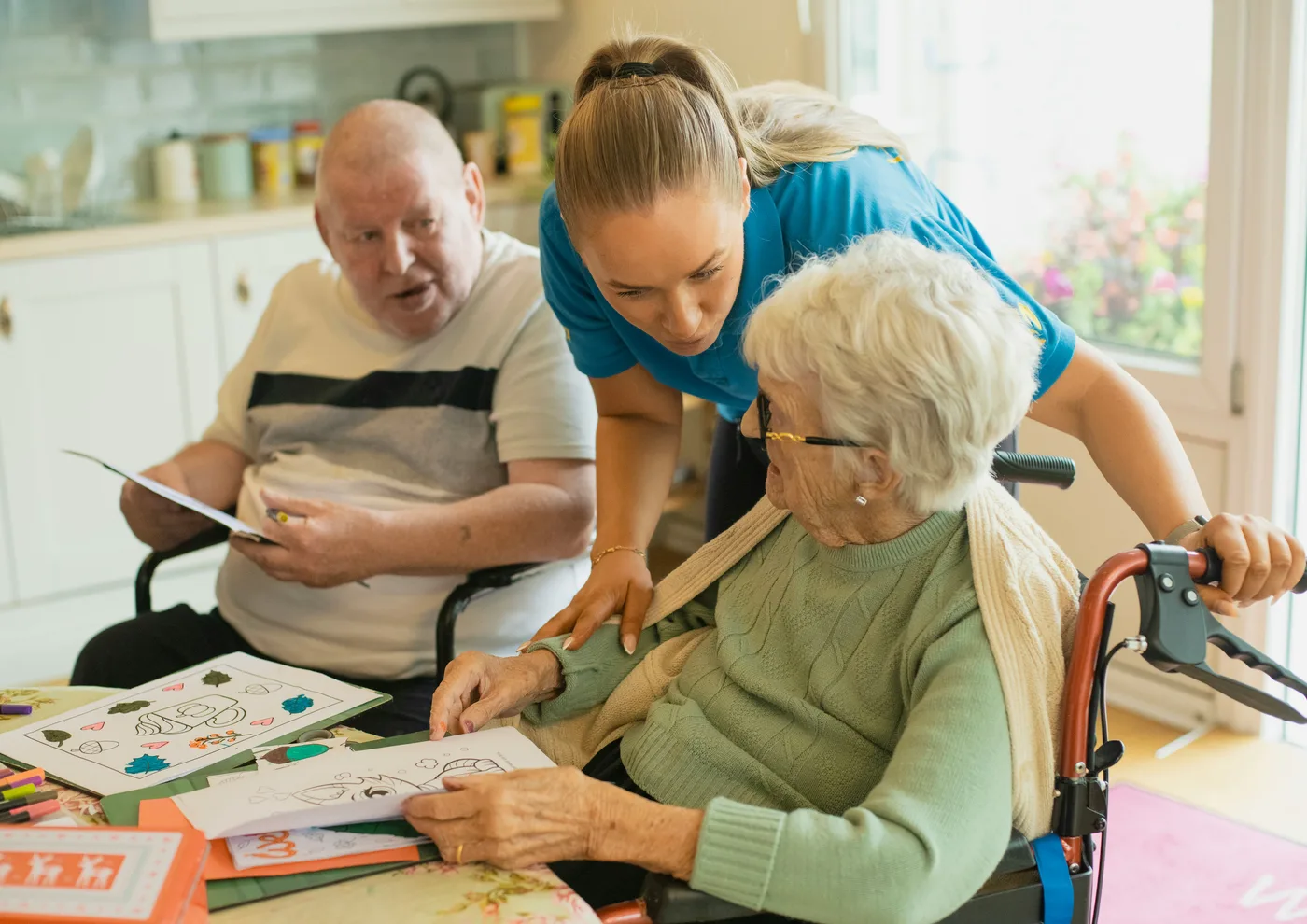
What is a seniors’ residence in Quebec?
A private seniors’ residence, often called an RPA in Quebec, is a setting that offers adapted housing along with a range of services based on the resident’s level of autonomy. It is not a hospital, and it is not an ordinary home either.
Quebec is the Canadian province where the share of people aged 75 and over living in a residence is the highest. According to the CMHC Seniors’ Housing Survey, 17% of Quebec seniors aged 75 and over lived in private residences in 2021, compared with 5% to 10% elsewhere in Canada.
Types of housing available
There are several levels of housing and care, depending on the degree of loss of autonomy:
- Lighter-service private seniors’ residences for people who are still autonomous but want a safety net
- Private seniors’ residences with care services for people who need structured daily support
- CHSLDs for people with major loss of autonomy who require constant medical care
- Maisons des aînés, a newer model offering a more intimate setting with smaller living units
Home care or seniors’ residence: the decisive criteria
There is no universal answer. The right decision depends on a combination of factors that are specific to each situation.
Functional autonomy
This is usually the first criterion. A person who can still manage daily activities with limited support is often better served at home. On the other hand, if personal-care needs are intensive, constant, or medically complex, a residence with care services may offer a more appropriate level of safety.
Safety at home
Certain conditions can make the home unsuitable without significant adaptations: fall risks, advanced cognitive impairment, geographic isolation, or a poorly adapted dwelling. Before concluding that home care is no longer possible, it is worth considering safety adaptations so that living at home remains safe.
The situation of family and caregivers
Caregiver burnout is a reality that is too often underestimated. When support rests entirely on the family, home care can become unsustainable over time. Bringing in regular professional services can often extend the period during which a person can safely remain at home while protecting family caregivers.
If this is your situation and you need a moment of respite, contact our team to explore options adapted to your reality.
Cost comparison: home care vs. residence
The cost of home care compared with a residence is often at the heart of the decision, but it is rarely simple to compare. The table below offers a practical overview.
| Criteria | Home care (private) | Seniors’ residence (RPA) |
|---|---|---|
| Average monthly cost | $1,000 to $4,000+ depending on services | $1,900 to $3,100+ depending on the type |
| Home-support tax credit | Up to 40% of eligible expenses | Eligible for certain services included in the lease |
| Service flexibility | Very high, à la carte | Varies by residence |
| Human presence | Based on the service plan | 24-hour presence depending on the care level |
| Living environment | Familiar home and routines | New setting and peer community |
| Social connection | Must be actively maintained | Often more structured |
Families who choose home care with well-calibrated private services can sometimes achieve a level of support comparable in quality to a private seniors’ residence, while preserving the older adult’s autonomy and familiar reference points.
The often-overlooked advantages of home care
The dominant narrative often presents a residence as the safest option. Yet research in gerontology consistently shows that remaining in a familiar environment can support psychological well-being, cognitive stability, and perceived quality of life.
The concrete benefits of in-home support for seniors are real: the person keeps their routine, habits, and sense of control. They maintain social ties in their neighbourhood and receive human presence that is chosen and personalized. Services can also be adjusted as needs evolve, without forcing a change in environment.
For families wondering about the first signs that a parent needs help, acting early can often extend the period during which a loved one can live safely at home.

When a residence becomes the better option
Even if home care is often the preferred solution, there are situations where moving into a residence is clearly in the older adult’s best interest. This is not a failure. It is an appropriate response to needs that the home can no longer meet safely.
These situations can include:
- Severe cognitive disorders, such as advanced Alzheimer’s disease or dementias with risky behaviours
- Complete isolation without a support network
- Medical needs around the clock that require constant supervision
- A home that is unsuitable and cannot realistically be modified
- Complete caregiver exhaustion with no alternative resources
In these cases, a private seniors’ residence or a CHSLD can provide real quality of life, greater safety, and relief for the family.
Conclusion
The choice between home care and a seniors’ residence cannot be reduced to a comparison of costs or services on paper. It depends on the person, their health, their values, their network, and the family’s ability to be involved.
What is certain is that an honest assessment of current and future needs is essential before making a decision. In many situations, home care with the right professional support is not only possible, but preferable.
Would you like to take stock of a loved one’s situation? Our team is available to support you, with no obligation and with an approach adapted to your reality.
FAQ
Is home care always cheaper than a seniors’ residence?
Not necessarily. The cost of home care depends on the volume of services required. For someone who needs little help, it can be significantly more affordable. But when care needs are substantial, such as extended presence, specialized care, or overnight supervision, the bill can exceed that of a private seniors’ residence. The Quebec tax credit for home-support services for seniors, up to 40% of eligible expenses, can however reduce the gap significantly.
How do I know if my parent can still safely live at home?
Several factors matter: the ability to manage daily activities such as meals, hygiene, and medication; the presence of safety risks at home; cognitive health; and access to a support network. An assessment by a health professional or home-care provider can provide an objective picture of whether home care is still suitable. CLSCs can also assess functional autonomy to guide the decision.
Can private home care and public services be combined in Quebec?
Yes. Most families combine both: CLSCs provide basic public support, such as nursing care, occupational therapy, or partial assistance, while private services fill uncovered time slots or add specialized care. This complementarity makes it possible to adapt support to real needs without having to choose one system over the other.